How to create a punk EP
A story on coping strategies, overcoming lack of talent and cheap solutions
Everybody has their coping mechanisms for stress. Some do sports. Some abusive substances. My coping mechanism is making something – the less related to my actual tasks the better. While stuck in a particularly challenging job, I started to play punk music in my home office lunch breaks. Here is how that went, and what I learned while doing so.
You don't need talent, you need (over)drive
When I was a teen, I learned the guitar. I wanted to play rock and punk classics. When picking my guitar class however, I must have mixed up my words. Classic Punk turned into Classical Guitar and I found myself buying a foot rest and a nylon stringed guitar. A Bourré by Bach did get me no bit... romantic encounters but I told myself it would be best to learn good technical skill before moving on to "simpler" music. Clearly, a great idea.
So I played in no bands (apart from a high school musical group where I played second guitar) and eventually stopped playing altogether. I still wanted to make music but also had to study and work and do other brain tingly things to not get bored. Also I held the firm belief, that making music required some sort of magical talent that you have or don't. And I didn't have it. So no music making for me!
Until one day I wanted to do a joke for a podcast and its 12 5 listeners and created a punk rock intro song. It was so easy to do. I was ecstatic.
You don't need gear, you need an overdrive
Here is how I did it. I had a focusrite scarlett solo gen 3 audio interface lying around. I like this one because it is (A) cheap and (B) has all the inputs you need (two): A big chunky XLR plug for my microphone and a jack for my guitar cable. I also had a guitar that I bought in my teens – I hardly ever played it properly because the steel strings hurt my classically trained fingers. I also had a bass guitar that I borrowed from a friend when helping them move.

Throw a macbook in the mix and you have my complete recording setup. Now, I needed software to record the sounds. Here are my thoughts on audio software for my kind of music (terrible punk): Ableton, Fruity Loops, Logic Pro are all probably decent pieces of software but they are expensive and complicated to learn. Reaper is nice but I have turned it into a podcasting software and now it was bad at producing music. Garage Band is perfect. No notes. Well, no, some notes. Midi notes. But yeah, Garage Band is great. Garage band is free, which is really cheap compared to the other software and it has Max.
Max is a robo drummer. I can tell Max to play louder or softer, simpler or more complex, I can even tell Max which drums to hit. All while not being able myself to hold a simple rhythm on a shaker. I could "program" Max with two clicks and create a backing track to play bass and guitar over. Max is surprisingly variable and capable and even does fills and so on. Who would have thought that the first job I have replaced by a machine is that of a drummer.
Now, my band was complete. I hooked up my microphone (a Shure MV7x dynamic mic) to Garage Band as well and could make singing-like sounds to go over the music.
And the best thing: the setup is so simple, I could figure it all out in a lunch break and still have time for a sandwich.
Just start doing stuff, for real
I hate people who give the advice of "just get going and you'll figure it out" but honestly, this is the best way to start making music as an inexperienced talentless hack with 250 € worth of gear. I wrote some silly lyrics, did zero editing or revisions on them and shoutsang them over my backing track. The backing track consisted of a basic bass line and four chords I had found by googling "cool chord progression" and picking one at random. I played two guitar tracks – one for the rhythm and one to add punch during the chorus.
For the guitar sound, I clicked around the Garage Band presets until I liked one well enough. I couldn't tell you for the life of me which one - that's something for the tone nerds to reverse engineer once I hit the big stage.
Because I was ashamed to put any sort of emotion in my singing (did I mention that I also have no musical talent) I made my style daft, bored, and almost sleepy. Some would call it mumble punk. Please don't. I sprinkled in some Berlin mannerisms, mentioned a currency that went out of circulation when I turned 12 and put it all together. I did barely any takes, because it was all fun and games. I didn't want to create anything, I wanted to spend 45 minutes of my day doing something pointless but exciting.
Becoming a master masterer
After recording there come two more steps: mixing and mastering. I don't fully understand the differences. I found a guide online that explained mixing with Garage Band and followed it step-by-step. I turned some knobs, boosted and lowered some track volumes and pretended to know what EQ settings worked best. Honestly, the best way forward is adjusting a bit and carefully turning things back the way they were until your ears stop bleeding. Worked for me.
I loaded my finished song into Apple Music (formerly known as Twitter iTunes) and then struggled a whole evening with getting music synced to my phone. I then performed the narcissistic ritual of listening nonstop to my own song, trying to find the things that annoyed me. During my next lunch break, I tweaked some settings and that's it.
The Big Stage
I have this annoying trait that I can't just do things and be happy with it. I need to make the world know that I did the thing. When my washing machine broke, I filmed the repairs. When I started drawing on my iPad, I created an insta account for my "art". And now, with a finished punk song (play count: 140, audience: 1) I did the obvious thing: I created a tiktok account for my punk persona.
And as a video platform doesn't work with mp3 files, I shot a music video.
For those who never shot a video, the simplest music video shoot goes like this: You play your music over a speaker and shoot through the whole song in a bunch of different scenes. You then stack all scenes in sync on top of one another in your favourite editing software (I used final cut but honestly would not recommend it) and then you just switch back and forth between takes while expressing your artistic vision.
So I did that with like 5 or 6 scenes in my home. I shot a scene waking up in bed, sitting on the toilet, lying in the bathtub and crouched against a wall. I lip synced to the best of my abilities (none) and looked tired (the one thing I'm good at). I edited the video, chopped it into less than 90 sec chunks and threw them into tiktok.
Eightteenthousand views later I had fans.
Keep doing stuff
Tiktok is a weird place. For obvious reasons but also for my spicy brain. With every like and comment I got doused with endorphins – at the same time I knew the whole thing was incredibly short-lived. I uploaded other chunks of the music video and got some hundred views.
So I started chasing the high. Not by posting ever increasingly unhinged takes on the role of women in society but by making more music. I used more lunch breaks to create more songs and soon enough I had enough together for an EP.
To maintain the appearance of a coherent artist, I wrote songs around things that mattered to me: being a fake punker, selling pictures of my feet online, drinking beer and also a version of a children's song. And how much I hate work. Typical, everyday relatable punk stuff.
Do it yourself punk
Being a one man show that spends up to 60 minutes on a full song production, I did not dare to even try a real stage. Instead, I listened to my tiktok followers. "spotify when", they asked, and "spotify how", I wondered. I picked the service ditto to publish my music. For 20 bucks per year they promised to publish my music in all places, most of which unknown to me. They had the important green S however, so I stopped worrying and learned to love the music industry.
When you are a nobody with no label and you use a cheap service, you mostly wait. I had to pick a date way out in the future and then waited forever until they approved my songs. Eventually, I could type my artist name into spotify and could actually listening to my own music over streaming instead of my local mp3. Magic.
Tiktok was happy about the spotify drop. For over a year now I have 31 active listeners that can't get enough of my Garage Band produced lunch break coping strategy. This is about 31 more than I hoped and aimed for and the fact that people actually enjoy what I do tingles my brain again. So if you are one of the 31: thank you.
But the story doesn't end here. First of all, I have to mention that I also created a band camp, a much better way to distribute music as an independent artist, because people can pay you money if they want to. And some did, so I am officially a paid music artiste.
More music
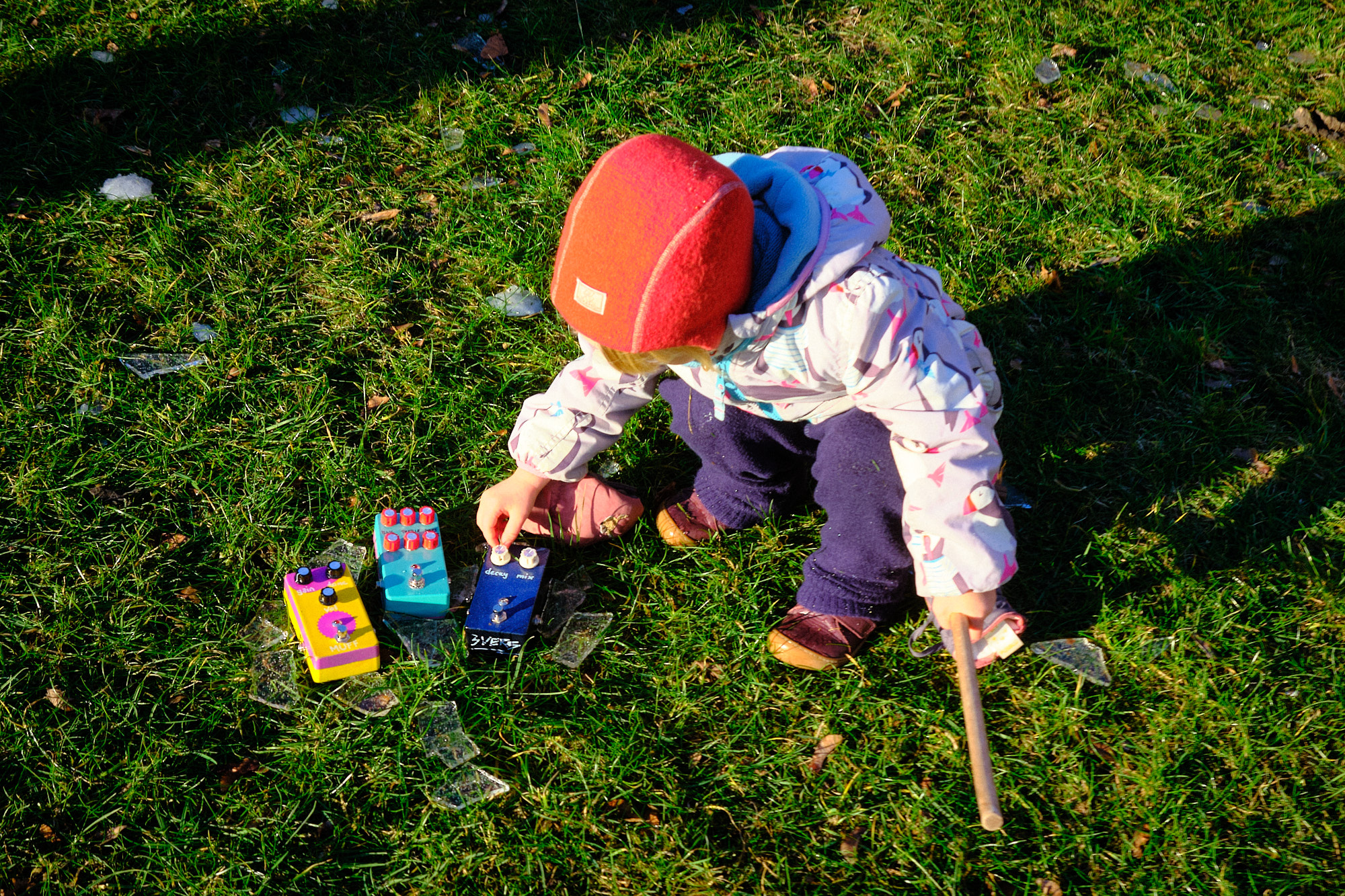
After my first EP, I took things more seriously. Who am I kidding, no I did not. I still used Garage Band to record in punk music in my home office in between video calls. I only upgraded from digital build-in effects to physical, analogue, self-soldered guitar effect pedals. I got an overdrive, a distortion and a reverb pedal that I now hook in between my guitar and the audio interface.

The upside is that I have way less latency and can play more accurately to the music now, because I hear myself in real-time. The downside is that I effectively bake in my sound at the time of recording. With digital effects, I can tune my guitar sound after I recorded it – which I hardly ever did. Another upside is that soldering my own pedal is objectively fun and also very cheap. For the price of one decent pedal I got three. And I could design their looks myself.
After my first EP, I made a second one. Wild, I know. My sound got a bit more aggressive because I had to cope more with the state of everything. Instead of blindly turning knobs during mixing, I asked a friend for help and they did a fantastic job. Oh, and my lyrics got more political. And that turned out to be a problem.
Ditching ditto
I dropped my second EP into ditto well in advance of my targeted publishing date, knowing that they take their sweet time. Mere DAYS before release, I received a message that my music could not be published as it contained "nazi propaganda". The offending song contains quotes from election posters and public interviews of German parties. Most of the lyrics are verbatim published statements from German politicians and some online app tells me that this is indistinguishable from nazi propaganda. Make of that what you will.
I tried a couple more times to get my song through, changing and altering potentially offending sections, with no luck. To this day, my second EP lives only on bandcamp. Which I am ok with, given that Spotify itself is not a great place to be. And real fans listen on bandcamp. Or so I tell myself.
So if you make offensive, leftist punk music, let me know how and where you publish it.
What have we learned (nothing)
Making music is fun. Don't let stupid tech bros tell you otherwise. You don't need fancy equipment. You don't need a ton of time. A cheap audio interface, an old Ibanez guitar, some free software, and a lunch break is more than enough to get going. We live in an age when it is both incredibly easy to make things and incredibly hard to not fall for any of the monthly subscription services that sell you some kind of basic feature like audio recording, mixing or publishing. Online guides are mostly trash. SEO has ruined everything and what looks like a helpful site is just a front to sell some course or PDF or app.
This long post here is the attempt to counter that. I don't want money from you. I don't sell anything. I simply want you to make music. If I can make 31 people happy, so can you.
PS: If you do want to support me, head over to bandcamp and pay what you want. But you don't have to, you can also listen to my music for free.
PPS: I also see making your own music as an exercise in countering AI. AI slop will engulf everything we hold dear – unless we start to make our own stuff and tell others about it. Spotify is already using in-house artists to fill generic work focus beat playlists and once AI becomes good enough, they won't even spend money on in-house humans anymore. If the entire industry turns to shit, we have to rely on other human artists to become beacons of purposeful silliness and home-made music.
PPPS: Non of my links are affiliate links, nor am I endorsing any products or services. I'm telling what I used, not what I think everybody should use. Make your own decisions, find your own path.